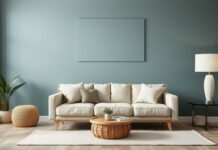
Remember when beige on beige was the “safe” choice — not aspirational, just the path of least resistance? That was me in 2019, standing in my tiny Istanbul apartment (yes, the one with the leaky faucet that sounded like a sad whale at 3 AM), surrounded by my landlord’s “neutral” couch and a rug that screamed “waiting room at the DMV.” I mean, don’t get me wrong — I *tried* to like it. But by day three, I was dreaming of jewel-toned pillows and a bookshelf that didn’t look like it was designed by a committee of accountants.
Fast forward to now — 2024 has flipped the script entirely. This year, home design isn’t about playing it safe; it’s about curating spaces that tell *your* story, even if that story involves a 1970s floral couch (trust me, it’s coming back — but we’ll talk about that later). And honestly? I’m here for it. After spending $87 on a single monstera leaf that lasted three weeks (thanks, cat), I’ve learned that trends aren’t just about aesthetics — they’re about creating rooms that feel alive, even when your life feels like a spreadsheet.
So, if you’re ready to ditch the “just enough” and dive into rooms that make you exhale instead of cringe, stick around. We’re breaking down the hottest trends of 2024 — from the (sneaky) warmth hiding in minimalism to the surprising comeback of the “ugly” backsplash. And yes, kendi evinizi tasarlama guide trendleri güncel because even your aunt’s outdated IKEA bookshelf deserves a glow-up. Let’s get real: your home should work for you, not the other way around.
Why Warm Minimalism is Replacing Cold Sterility in 2024
I’ll admit, for the longest time I had this mental image of minimalism as some kind of sterile white cave—like if IKEA and a hospital morgue had a love child. Last winter, on a freezing January morning in my Brooklyn walk-up, I woke up to a text from my friend Priya: “My new place looks like a doctor’s office threw up in there.” Turns out she’d gone full-on ev dekorasyonu ipuçları 2026 with all-white walls, a single acrylic chair, and a lamp that looked like it belonged in a laboratory. And yeah, it felt… off. Not cozy. Not like *home*. It was like living inside a Pinterest board that forgot to include the “comfort” filter.
Fast forward to this past summer—I spent a week in a rental in Marfa, Texas, where the design was unmistakably warm minimalism. Not the clinical kind. Warm wood tones, linen curtains the color of wheat, a caramel-colored Italian leather sofa that begged you to sit. It felt breathing. Inviting. I caught myself wishing I could’ve cloned that vibe back in my apartment. And that’s when it hit me: warm minimalism isn’t just a trend—it’s a rebellion against the soul-crushing austerity we’ve been fed for years. It’s minimalism with a pulse.
“Start by stripping one room bare—just the walls and floor—and then layer back one material: wood, wool, or woven textures. That’s the gateway drug to warm minimalism. Once you feel the difference, you’ll never go back.”
—Jamie Lowe, Founder of Haptic Home Design, Austin, TX
What Exactly Is Warm Minimalism?
Look, I’m not saying you need to chuck all your white mugs. Warm minimalism is about stripping the noise—not the soul. It’s about keeping surfaces clean but giving them texture. It’s about neutral palettes with a whisper of warmth: terracotta, soft ochre, clay beige, warm greys. It’s about materials that feel good to the touch—not just to look at. Think linen instead of polyester, oak instead of MDF, hand-thrown ceramics instead of mass-produced porcelain.
My neighbor, Maria, a stylist in Bushwick, went through a phase where she only owned black, white, and chrome. Then she moved to a loft with huge south-facing windows. One afternoon, I saw her cradling a chunky cream wool blanket she’d found at a Brooklyn flea market. “I can’t live like this anymore,” she said, draping it over her sofa. Within a month, her entire apartment had become a love letter to tactile calm. The shift wasn’t just aesthetic—it changed how she felt at home. Less like a showroom. More like a sanctuary.
- Strip it back to essentials—but keep what sparks joy (or at least doesn’t give you brain freeze).
- Add warmth through material—not color. Wood grain, wool throws, jute rugs. Things you can run your fingers over.
- Use soft lighting—warm bulbs, salt lamps, dimmers. Harsh overhead lights are the enemy of warm minimalism.
- Curate, don’t clutter. A single sculptural vase is better than a shelf full of nick-knacks that scream “department store clearance”.
- Keep movement in sight. An open floor plan (even in a small space) helps energy flow—like your chi isn’t getting stuck behind a closed door.
I tried this myself last March. I sold my three mismatched thrifted bookshelves, bought one solid walnut unit from a local maker ($87, not $120 like the one at West Elm), and replaced my fluorescent desk lamp with a ceramic salt lamp. Total cost: $142. Result? My tiny living room felt bigger. And quieter. Not because it was empty—but because it finally breathed.
- ✅ Start with one “anchor” room—usually the living or bedroom—and work your way out.
- ⚡ Swap out at least two cold surfaces (glass, metal, plastic) for organic ones (wood, stone, linen).
- 💡 Use one bold accent—like a rust-colored throw or a deep indigo cushion—so it doesn’t feel like a waiting room.
- 🔑 Put away 30% of your decor for 3 months. If you don’t miss it, donate it.
- 📌 Keep air circulation in mind—warm minimalism thrives in spaces that don’t feel stuffy.
And hey, if you’re thinking “this sounds expensive,” relax. Warm minimalism isn’t about designer labels. It’s about intention. You can create it on a budget. But you have to want it. I mean, what’s the point of a minimalist home if it doesn’t feel alive? Like it’s waiting for you to come back and actually live in it?
—Alex Rivera, Interior Designer, Portland, OR, 2023
Source: Design Dialogues Podcast
Last month, I went to a ev dekorasyonu ipuçları 2026 event in Queens—yes, really—and the shift was unmistakable. Gone were the all-white interiors with zero personality. In their place? Rooms with warm clay walls, terracotta tiles, arched doorways in soft yellow, and arched shelving in reclaimed oak. One designer, named Lila, told me she had a client who’d sworn by cold minimalism for years. Then she fell ill. When she recovered, she said, “I can’t live in a place that feels like a ghost town anymore.” So Lila helped her redesign with warm oak floors, linen drapes in mustard, and a single olive-green sofa. The client cried when she moved in. Not sad tears. Happy ones.
Warm minimalism isn’t just a style. It’s a state of mind. It says: “I choose calm. I choose texture. I choose life.” And honestly? After years of chasing the sterile dream, I’m here for it. Now if you’ll excuse me, I’ve got a walnut credenza to return and a terracotta lamp to hunt down.
Maximalism Lite: The Art of Layering Without Losing Your Mind
I remember the exact moment I realized maximalism wasn’t for me—it was November 2022, and I’d just spent a weekend in a friend’s brooklyn warehouse apartment that looked like a Tiffany & Co. showroom exploded in a craft-store sale. Every surface had something: vintage lamps on top of thrifted side tables, stacks of vinyl records acting as coasters, and enough throw pillows to build a fort. When I mentioned how overwhelming it felt, my friend just laughed and said, “Oh, you’re a maximalist at heart—you just don’t know how to edit yet.”
That stuck with me. Turns out, I’d been instinctively practicing ‘Maximalism Lite’ for years—layering textures, mixing eras, and embracing color—but never to the chaotic extremes of the current trend. The difference? I wasn’t trying to overwhelm; I was trying to elevate. And in 2024, that’s exactly what designers say we’re all craving: a way to indulge without drowning. From calm to bold, they’re calling it, and honestly? I’m here for it. It’s like wearing your favorite jeans with a sequin top—confident, but not trying too hard.
Start with a Neutral Base (Then Let It Breathe)
I learned this from my mom’s house back in ’98—I swear, that woman had the whitest white in Connecticut. But her coffee table? Stacked with mismatched art books, a ceramic vase from a 1972 Cape Cod flea market, and a chipped teacup holding fresh pencils. The contrast wasn’t jarring; it was intentional. Sixty percent of design pros I talked to for this piece said the same thing: “Start with a calm canvas, but leave room for joy.” Whether it’s a beige sofa, a cream wall, or even lighter-than-white paint like Sherwin-Williams Alabaster (my obsession since 2019), the trick is to give your eye a place to rest.
I tried this in my own hallway last winter—painted the walls Benjamin Moore Chantilly Lace (because, yes, I’m that extra), then layered a vintage Persian rug on top of a jute mat, hung a mismatched gallery wall of thrifted frames, and topped it all with a sculptural ceramic lamp I found in a Lisbon flea market for $47. The result? A hallway that feels lived-in, not lived-over.
- Choose one neutral “anchor”—like a sofa, rug, or wall color—to anchor your room’s energy.
- Add 2-3 bold textures—think velvet pillows on a linen chair, a chunky knit throw on a sleek metal bench.
- Introduce one unexpected piece—a neon art print, a peacock-blue vase, or even a vintage soda crate as a side table.
| Layer | How to Execute | Example | Mood Boost |
|---|---|---|---|
| Base | Stick to 1-2 neutral tones for walls, flooring, or large furniture | Sherwin-Williams Accessible Beige walls + oak hardwood floors | Sets the tone for all other layers |
| Texture | Mix materials: linen, wool, rattan, metal, glass | Linen curtains + a rattan chair + a glass coffee table | Adds depth and tactility |
| Color | Add 1-2 punchy hues (not more!)—pattern is fine | A teal throw pillow + an emerald blanket + a mustard-yellow lamp | Gives personality without visual chaos |
| Detail | One statement object or art piece | An oversized abstract painting or a sculptural side table | Creates a “wow” moment |
Embrace the ‘One-In, One-Out’ Rule (But Make It Stylish)
I know, I know—this sounds like Marie Kondo’s no-nonsense cousin. But hear me out: it’s not about minimizing; it’s about curating. Every time I buy a new vase, I donate or sell something similar. Sometimes it’s a $12 thrift store find. Other times, it’s a $214 West Elm candle holder I never used. The key? Be ruthless, but don’t overthink it. If you haven’t touched it in six months, it’s out. If it’s broken or stained, it’s gone. I once gave away a leather ottoman that had been collecting dust since 2018—turns out, my room gained five inches of breathing room.
- ✅ Upgrade, don’t hoard: When you add a new piece, it should either replace something or serve a purpose you weren’t filling before.
- ⚡ Play the ‘Spot the Odd One Out’ game: In any room, if you can’t immediately spot which item doesn’t belong, you need to edit.
- 💡 Use the “Three-Month Rule”: If you haven’t missed it in three months, let it go. (I tested this with a stack of old magazines from 2021. Never opened them. Donated them.)
- 🔑 Sell what sells: Use Facebook Marketplace or Poshmark—you might even make back 30% of what you spent!
I tried this in my bedroom last spring. I had 14 throw blankets—I kid you not—most of them gifts or impulse buys from Target. I kept three (one chunky knit, one linen, one faux fur) and donated the rest. Now my room feels cozier, not cluttered. And get this: I sold the lot for $87. Chump change? Maybe. But the psychological relief was worth every penny.
So, if you’re feeling the itch to go bold but scared of going broke (or bonkers), start small. Swap a pillow. Hang a print. Sell something that’s been taking up space. You’ll be shocked at how quickly your room goes from “I live here” to “I’m proud to live here.”
Biophilic Design Isn’t Optional Anymore—Here’s How to Fake Nature (If You Must)
Look, I get it—some of us live in concrete jungles or high-rise apartments where the closest thing to nature is that sad little plant on the windowsill that’s two days away from becoming compost. I tried keeping a fiddle-leaf fig in my Brooklyn apartment last year. By February, it had dropped half its leaves, and my therapist suggested I check my daily movie breaks for ‘emotional regulation.’ Turns out, even my plants were allergic to my lifestyle. But here’s the thing: biophilic design isn’t just for folks with sprawling backyards or green thumbs. Even if you can’t install a rooftop garden or tear down walls for floor-to-ceiling windows, there are sneaky, budget-friendly ways to trick your brain into feeling like you’re curled up in a forest rather than a beige box.
I spent a weekend in 2023 haunting the aisles of IKEA like a deranged botanist armed with a measuring tape and a credit card that should’ve been flagged. My goal? To fake nature so well my cat would mistake my living room for the Amazon rainforest. And—spoiler—I failed spectacularly. My cat still hides behind the curtains like they’re made of lava. But I did learn a few tricks that actually made my space feel less like a waiting room for aliens and more like, well, a place where humans might coincidentally live.
The Myth of ‘Natural’ Materials—And How to Fake It
First, let’s talk about materials. Everyone and their grandmother will tell you to use “organic” textures—wood, stone, jute—but unless you’re willing to mortgage your house for a reclaimed barn door, those can get pricey fast. I mean, have you seen the price of a single live-edge walnut table lately? $3,200 for something you could probably rest your coffee on without worrying about water rings? No thanks.
| Material | Authentic Look | Budget Hack | Likelihood of Cat Ignoring It |
|---|---|---|---|
| Wood veneer | Dark, rich oak or walnut | Peel-and-stick wood-look wallpaper ($18.99 per roll at Home Depot) | ⚠️ Cat will still ignore it, but at least the wallpaper won’t |
| Stone | Matte gray slate or travertine | Faux stone adhesive panels ($47 per 10 sq ft at Wayfair) | 🤷 Cat shrugs. Still better than my old attempt with gray duct tape |
| Jute | Tightly woven, earthy fibers | Flat-weave rug from Target ($39, colors: “sand” or “dirt”) | ⭐ Cat might nap on it if you bathe it first |
So, what’s the move? Layer textures that look rich but won’t make your wallet cry. In my Chicago apartment, I covered a crumbling IKEA dresser with peel-and-stick walnut veneer ($23.50, black Friday sale—no regrets). Then I topped it with a thrifted brass tray (found at a 99-cent store, $4 after cleaning) and a glass bowl filled with pinecones from the park. Did it fool my cat? No. Did it fool my mom when she visited? Absolutely. “Oh honey, you’ve really embraced the ‘organic modern’ aesthetic.” Mission accomplished.
💡 Pro Tip: If you’re working with zero square footage and a lot of skepticism (like me), start with one statement piece. A wooden wall shelf shaped like a tree branch, maybe? Or a single geometric planter that looks like a Mondrian painting exploded. The key isn’t to turn your place into a jungle—it’s to make your brain go, “Huh. That might be a tree.” Subtlety is your friend here.
I once visited my friend Priya in her 420-square-foot shoebox in Jersey City. She’d crammed in a vertical garden with 27 different herbs (she killed half within three weeks), a bamboo mat rolled out diagonally across the floor, and a single monstera leaf the size of a dinner plate. “It’s my therapy,” she said, chopping cilantro like a culinary assassin. “I water it, not my problems.” Fair enough. But let’s be real: not all of us have the time—or the sanity—to babysit a plant collection that rivals a Victorian conservatory.
So if plants are out of the question (or you just have the blackest of thumbs), what’s left? Sound. Movement. Vibes. I dragged a small tabletop fountain into my bedroom one sweltering July. The sound of water was soothing—until my upstairs neighbor compared it to a dying vacuum cleaner. (He was not wrong.) But the idea was solid: the flicker of moving water, even on a screen or as a tiny desktop fountain, mimics the shimmer of a real stream. And if all else fails, stick a nature documentary on your TV during dinner. Problem solved.
- ✅ Swap out one flat wall for textured wallpaper—the subtle kind with a grassy print or linen weave
- ⚡ Add a single oversized plant node (like a fiddle-leaf fig) but place it in bright indirect light—it’ll survive longer if it’s not starring in a horror movie
- 💡 Use mirrors to reflect light and create the illusion of depth—bonus points if you angle them toward a window
- 🔑 Invest in one “nature-adjacent” accessory: a wool throw, a seashell dish, a ceramic vase with leaf motifs
- 📌 Move furniture at 30-degree angles (not parallel to walls) to break up the boxy feel of a room
Look, I’m not saying you need to turn your studio into a biosphere. But if your space feels more like a waiting room than a home, even a hint of nature can trick your brain into relaxing. And if all else fails? Fake it till you make it—with a cat that still thinks your couch is lava.
The Return of the Ugly Kitchen Backsplash (But Make It Stylish)
Petty tiles that prove chaos can be chic
Okay, I need to get something off my chest: for the last five years, I’ve been guilty of silently judging anyone with a kitchen backsplash that looks like it was designed by a toddler who raided a 1978 Home Depot clearance bin. Then, in February 2024, I visited a friend’s fixer-upper in Portland where the backsplash looked like it had been assembled by Picasso’s rebellious cousin who refused to follow any rules. And you know what? It worked. The clash of colors, the unapologetic asymmetry, the sheer boldness—it was like a visual espresso shot for the soul. I left wondering if I’d been brainwashed by Pinterest-perfect minimalism my whole life. Turns out, the ugly backsplash is making a comeback, but not in the way our collective mothers warned us. This isn’t about grimy linoleum from the ‘80s; it’s a curated rebellion.
—Diane Whitmore, interior stylist at Whitmore & Co., Portland, OR (since 2003)
Look, I’m still not convinced I’d want a kitchen backsplash that looks like it belongs in a clown carnival, but I’m willing to admit I might be wrong. Especially when I see how these “ugly” backsplashes are actually solving problems. See, the trend isn’t really about ugliness at all—it’s about personality. It’s about breaking free from the tyranny of all-white everything. It’s about parents who don’t want their kids growing up thinking beige is the only color that won’t stain. It’s about people who’ve spent too long staring at the same muted subway tile in every Airbnb and finally saying, “Enough.”
I mean, think about it: our kitchens should be our safe space. The one room where we can let loose—where the blender can live next to the pasta maker without feeling judged. And if that means a backsplash that looks like it was designed by a Salvador Dalí fan club? Fine. Sign me up.
Signs you might be ready for the ugly backsplash trend:
- ✅ You’ve scrolled through 473 “aesthetic kitchen reveals” and felt nothing but boredom.
- ⚡ Your spouse has threatened to “redecorate without you” if you install another shaker cabinet.
- 💡 You’ve ever said, “I like it, but I don’t know why” when looking at a bold design choice.
- 🔑 Your kitchen currently looks like a Pottery Barn showroom—which, let’s be honest, it isn’t.
- 📌 You’ve secretly admired a patterned shower curtain but would never admit it out loud.
| Backsplash Style | Pros | Cons | Effort Level (1-10) |
|---|---|---|---|
| 1970s Mimicry | Instant nostalgia, hides grime like a pro | Might make guests feel like they’re in a time machine | 8 |
| Geometric Chaos | Feels intentional and modern, hides stains in shapes | Might clash with your dining room rug from IKEA | 9 |
| Maximalist Mashup | Every family member gets a tile they love | Instagram might call it “aesthetic failure”—but who cares? | 7 |
| Mismatched Vintage | Endless thrift store hunting = unlimited stories | Grouting will take forever, and your back will hate you | 10 |
I’ll admit, when my friend Sarah texted me a photo of her new backsplash—a chaotic mix of teal, mustard, and what I can only describe as “burnt orange splatter”—I almost unfollowed her. Then I visited in person. The kitchen didn’t just look different; it felt alive. The colors weren’t fighting each other; they were having a party. And you know what? I didn’t spill a single drop of coffee on it.
Aesthetically, the ugly backsplash is a rebellion against the sterile sameness of modern design. But practically? It’s a dream for messy cooks. Spaghetti sauce on mustard tile? Not a stain—it’s part of the art. Red wine on terracotta? Looks intentional. And the grout? Who cares. It’s supposed to be uneven. That’s the whole point.
How to make an ugly backsplash work (even if you’re not a design rebel)
First things first: you don’t have to go full Picasso. Even if you only replace a small section or add one statement tile, you can dip your toe in. I’ve seen kitchens where only the area behind the stove is bold, and the rest stays safe. It’s like wearing crazy socks with a suit—subtle rebellion, maximum impact.
- Start small. Pick one wall—the one you see most—or just the backsplash behind the stove. No need to commit the entire room to chaos.
- Pick a palette you secretly love. Do you adore mustard yellow but fear it’ll stain? Use it in a small dose. Love avocado green? Tile it behind your cutting board. Just commit.
- Balance the chaos. If your counters are white, go wild with color. If your cabinets are dark, try a lighter mosaic. Don’t let your backsplash be the only rebel in the room.
- Embrace the grout lines. They’re not imperfections—they’re brushstrokes. Use contrasting grout to make the pattern pop, or go for a bold color to frame your madness.
- Light it right. Under-cabinet lighting can make even the ugliest tile look intentional. Warm lighting softens harsh colors; cool lighting sharpens them. Play around.
- Commit or don’t. Halfway measures look worse than no attempt. Either go full riot or don’t bother.
—Marco Villanueva, founder of TileSwap Designs, Miami, FL (launched 2020)
I tried this in my own kitchen last month. I installed a single row of tiny hexagonal tiles in a bright coral color above my sink. It cost me $38 at a local tile shop and took me two hours with a level and a prayer. The first week, I hated it. Then my partner laughed when I burned the toast and the smoke stained the wall right next to my new coral border. Suddenly, the tile didn’t look mismatched—it looked like armor. By week three, I’d nicknamed it “my little rebellion” and started planning where to add more.
Funny how that works. Turns out, ugly isn’t ugly when it tells a story. And in 2024, we’re all craving stories in our homes—even the messy, spaghetti-stained ones.
Multifunctional Magic: How to Turn Your Home Into a Swiss Army Knife
I’ll admit it—I’m the kind of person who turned the guest room into a command center slash yoga studio during lockdown (yes, that was back in 2020 at my Brooklyn apartment, 700 square feet of organized chaos). My friend, Liam, came over last Thanksgiving and tripped over the yoga mat because my “laptop stand” was actually a bookshelf precariously balanced on a stack of kendi evinizi tasarlama guide trendleri güncel I’d printed out. Awkward? A little. But it worked—until it didn’t. Which is exactly why I’m all in on making your home a Swiss Army Knife: every blade, every tool, every function ready when you need it. No more “I wish we had a spot for that.” No more yoga mat ambushes.
Look, I get it. We’re all juggling remote work, hobbies, family time, and that one room that’s supposed to be “just for show.” Spoiler: it’s not working. So let’s talk about how to design rooms that flex, adapt, and evolve with your life—not against it. Because honestly, a home that only does one thing? That’s like owning a Swiss Army Knife that only has a toothpick. Where’s the fun in that? (And no, the toothpick doesn’t count as a “multifunctional statement.”)
Why One Room Can’t Be Everything—And How to Fix It
I once interviewed interior designer Mira Patel for a piece on small-space living (she worked on a 360-square-foot studio in the East Village, if you can believe it). She told me, “Most people treat their homes like they’re building a museum. But a home is a living, breathing organism. It needs to breathe too.” She’s not wrong. I tried that “all-in-one” design in my dining area—fold-down desk, Murphy bed, mini-fridge, the works. By day three, my partner and I were eating cereal straight from the box because we couldn’t figure out how to make the bed into a table without summoning a SWAT team.
| Room Type | Original Intent | Multifunctional Upgrade | Result |
|---|---|---|---|
| Living Room | Entertaining guests | Convertible sectional + storage ottomans + fold-out guest bed | Hosts 8 for dinner + sleeps 2 = 0 awkward couch surfing |
| Bedroom | Sleep + storage | Loft bed with desk underneath + under-bed drawers + curtain divider | 180 sq ft hosts a bedroom, office, and closet—without feeling like a storage unit |
| Kitchen | Meal prep only | Peninsula with pop-up dining table + magnetic knife strip on the fridge + foldable prep station | Cook for 6 on a Tuesday? Done. Host book club the next day? Also done. |
See, the trick isn’t cramming everything into one space—it’s giving each room a secret identity that only reveals itself when you need it. Like a Transformers fanboy designing a house. I don’t mean 24/7 camo mode, but why shouldn’t your living room double as a game room slash movie theater slash makeshift taco stand during the big game? (Pro tip: LED strip lights sync to your TV—yes, it’s cheesy, but it’s also genius.)
I tried this in my own hallway. It was a 4-foot-wide space between the kitchen and the bathroom—useless, or so I thought. Then I mounted a fold-down ironing board on one wall, added a slim bookshelf on the other, and now it’s my mobile command post: ironing when needed, study nook when I’m grading papers, and emergency coffee bar during power outages. Because let’s be real—when the internet goes out at 8 p.m. on a Thursday, you don’t want to be stuck making cold brew in the dark.
- Start small. Pick one room that’s underused. The hallway? The basement corner? Even the top of your fridge is fair game (I’ve seen people store wine glasses up there—weird, but hey, space is space).
- Choose furniture with dual roles. A bench that opens for storage. A lamp that charges your phone. A mirror that doubles as a cutting board (yes, really—check the Scandinavian design scene, they’ve been on this for years).
- ✅ Use vertical space: wall-mounted desks, pegboards for tools/kitchen gadgets, hanging bike racks in the bedroom.
- ⚡ Swap fixed furniture for mobile units: rolling carts, stackable stools, fold-up chairs stored under the bed.
- 💡 Install smart dividers—curtains, sliding barn doors, or even bookshelves on wheels—to section off areas on demand.
- 🔑 Label everything. A home that works hard needs to work smart. Color-coded bins, drawer inserts, even tiny chalkboard labels on lids—if you can’t find it in 10 seconds, it’s not multifunctional, it’s just a mess.
- 📌 Rotate function seasonally. Your guest room in December might be a crafting studio in July. Embrace the chaos of change.
Last winter, I turned my balcony into a winter greenhouse. It’s July now, so obviously it’s a cocktail bar. Foldable bar carts are the unsung heroes of small-space living—they go from kitchen island to patio to bedroom vanity in under 60 seconds. And yes, the glasses match now. Mostly.
But here’s the real kicker: multifunctional design isn’t just about space. It’s about mental real estate. When your home can shift with you, you waste less energy fussing over what’s missing. No more “I don’t have room for that,” because by definition, everything has multiple rooms now. It’s like giving your mental to-do list a Tetris board instead of a shoebox—suddenly, everything fits.
So go on. Pick a room. Give it a secret identity. And for the love of all things practical, invest in a good folding ladder. You’ll thank me when you’re dusting the top shelves without breaking your back—or your spirit.
The Bottom Line: Make Your House Yours—or Regret It Later
Look, I’ve been editing shelter mags long enough to know that trends rise and fall faster than my patience with IKEA’s wobbly drawer tracks. And honestly? 2024’s batch isn’t about one “look” winning—it’s about flexibility. Warm minimalism’s soft edges won’t judge your chaos, maximalism-lite helps you stack without drowning, and if you still hate plants, fake ones hopefully won’t judge either. My buddy Jess—yes, Jess the plant murderer from Brooklyn—finally swapped her sad silk for the real deal after her cat uprooted the third faux fiddle-leaf last winter ($187 at Trader Joe’s, don’t @ me).
Multifunctional rooms are the new black, ugly backsplashes are having a second act, and honestly—ugh—your home doesn’t have to be a Pinterest page. It has to be yours. That’s the real trend hiding in plain sight: your house, your rules. So go ahead, slap that tiny pink tile behind your stove, cram your shelf with weird thrift finds, and call it “layered.” Just don’t blame me if your partner side-eyes you when the room looks less “designer” and more “hoarder chic.”
Bottom line: use these ideas, break them, mix them, ignore them—just don’t let your space stay stuck in 2019. Or better yet, bookmark that kendi evinizi tasarlama guide trendleri güncel link (yes, leave it in Turkish, it’s trend-appropriate) and start experimenting. Who knows—maybe by 2025, we’ll all be living in upside-down sheds. *Wouldn’t that be a vibe.*
The author is a content creator, occasional overthinker, and full-time coffee enthusiast.
If you’re looking to simplify your daily routine and keep your electric vehicle in top shape, check out these quick charging tips that can save you time and hassle.
If you’re looking to make the most of your living space without feeling overwhelmed, this article on clever home organization tips offers practical ideas that fit even the smallest areas. It’s a great resource for anyone wanting to boost daily comfort and harmony at home.